
Guided Learning
Polygons
Area: Mathematics
Theme: Convex and non-convex polygons
Grade: 6th grade
Estimated time: ⏱️ 2 classes
🔍 Investigation · 📐 Plane Geometry
Letter to the User
Guided Learning – Inspire Universe
Welcome to Inspire Universe's Guided Learning.
The Guided Learning tracks were created to help you organize your studies, deepen your understanding of the content, and turn scientific concepts into hands-on learning experiences.
Each track brings together structured activities, experiments, challenges, reflections, and investigative tasks that can be used in two ways:
- By the teacher, as a support tool for planning and delivering classroom activities;
- By the student, as a step-by-step study guide for learning inside and outside of school.
Here, learning goes beyond watching or reading: you are invited to observe, test, measure, compare, calculate, reflect, and connect ideas — developing essential scientific skills such as critical thinking, curiosity, and intellectual independence.
The activities were organized into thematic tracks, written in clear, accessible language, and designed to accompany you at every stage of your learning path, from your first contact with the topic to mastering the content.
At the end of each track, we invite you to keep exploring:
- Completing the quizzes available in the app.
- Revisiting the digital content.
- Deepening your understanding of the Universe and the scientific phenomena that surround us.
About the Use of This Material
This material is made available exclusively for educational use within the Inspire Universe platform.
Reproduction, distribution, commercialization, or sharing of this content, in whole or in part, by any means, without express authorization, is prohibited.
The responsible use of this material ensures that the educational, editorial, and scientific work involved in its creation is properly valued and allows us to continue developing new tracks, content, and learning experiences for you.
Evobooks Team
What will you learn?
You will learn what sets a polygon apart from other geometric shapes, what sides and vertices are, and what makes a region convex — building up to confidently identifying convex and non-convex polygons.
Why does this matter?
Polygons appear in road signs, buildings, objects, and drawings. Knowing how to identify them helps develop geometric reasoning and a deeper understanding of the shapes that surround us.
Step 1 — Exploring
Recognizing Geometric Shapes
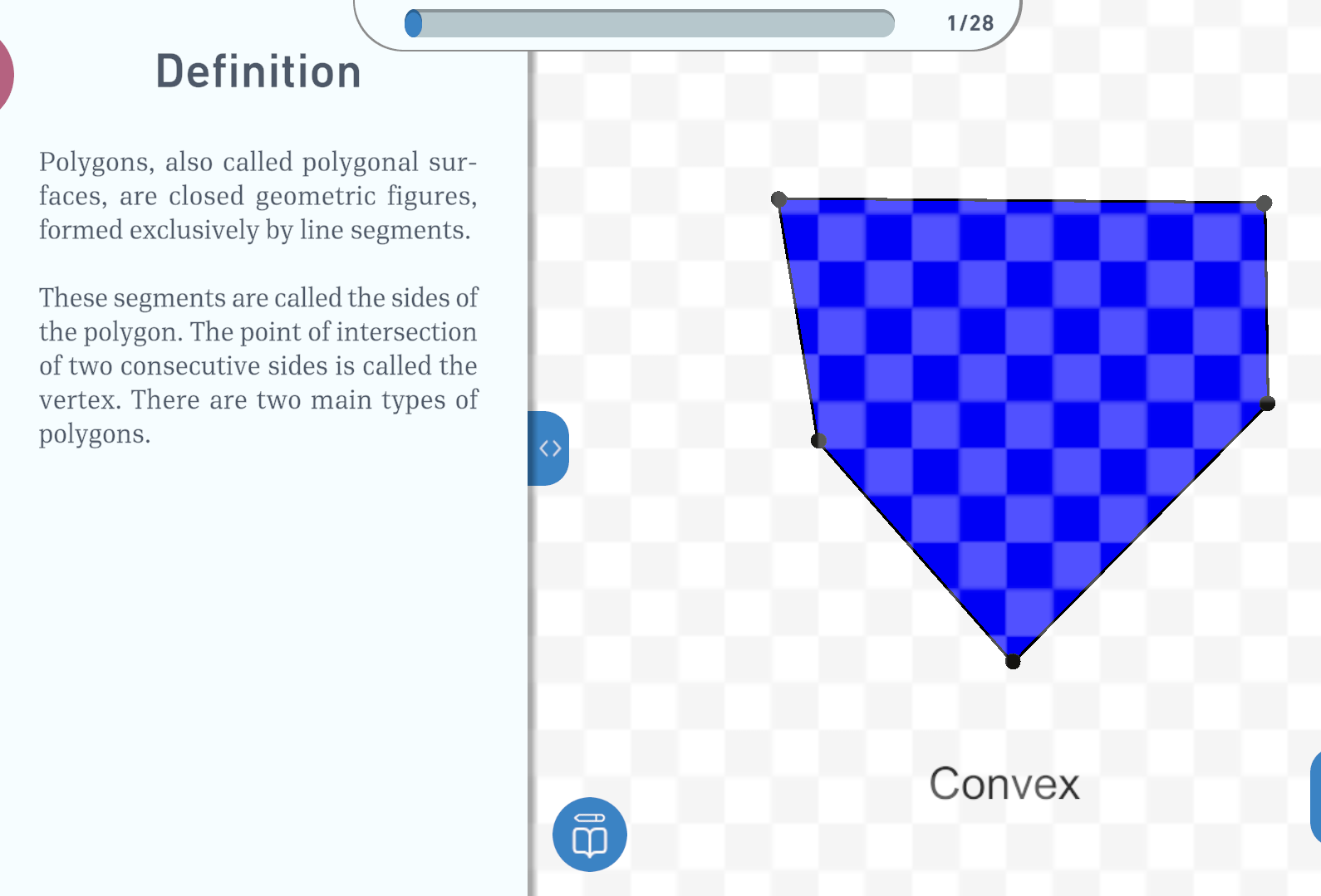
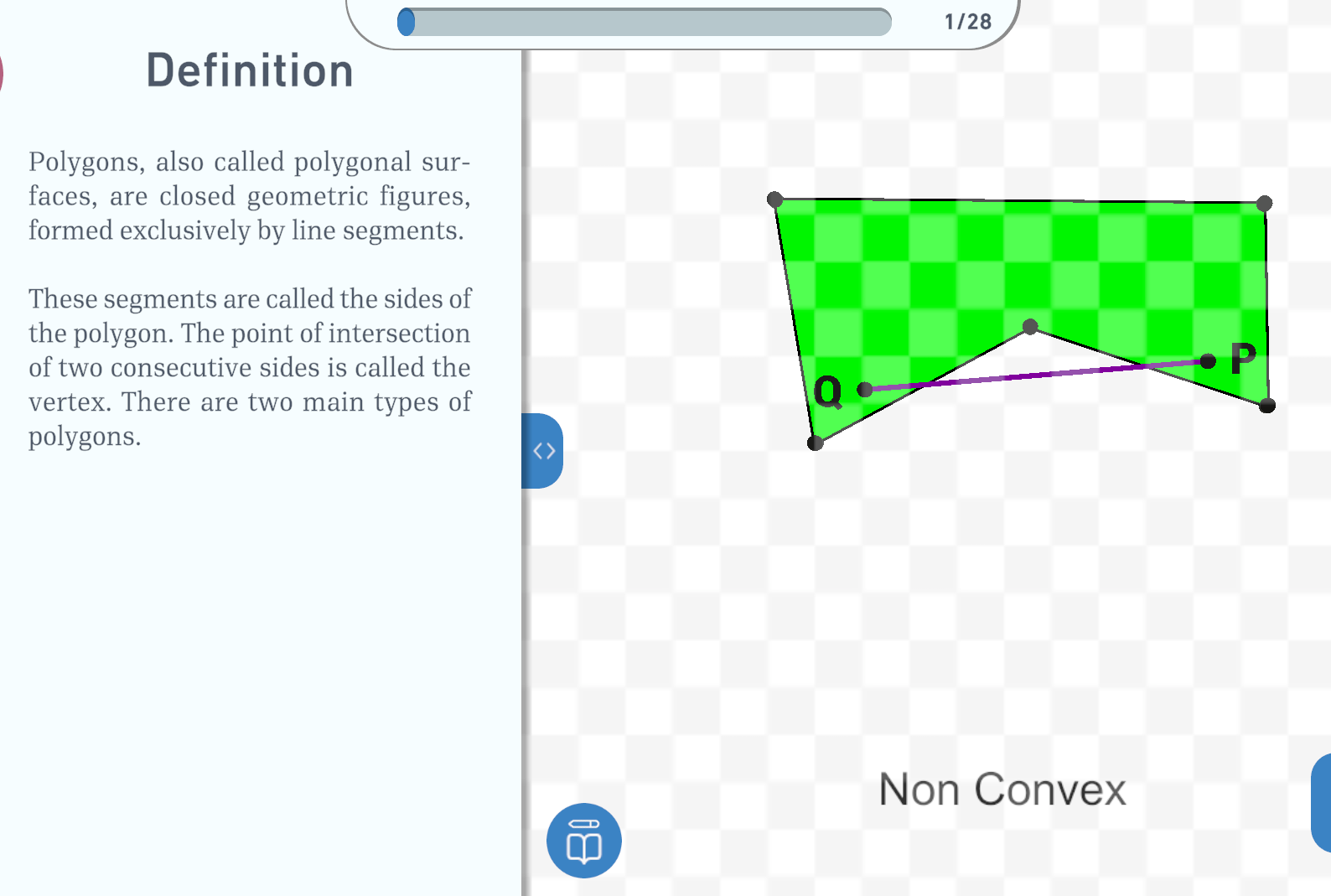
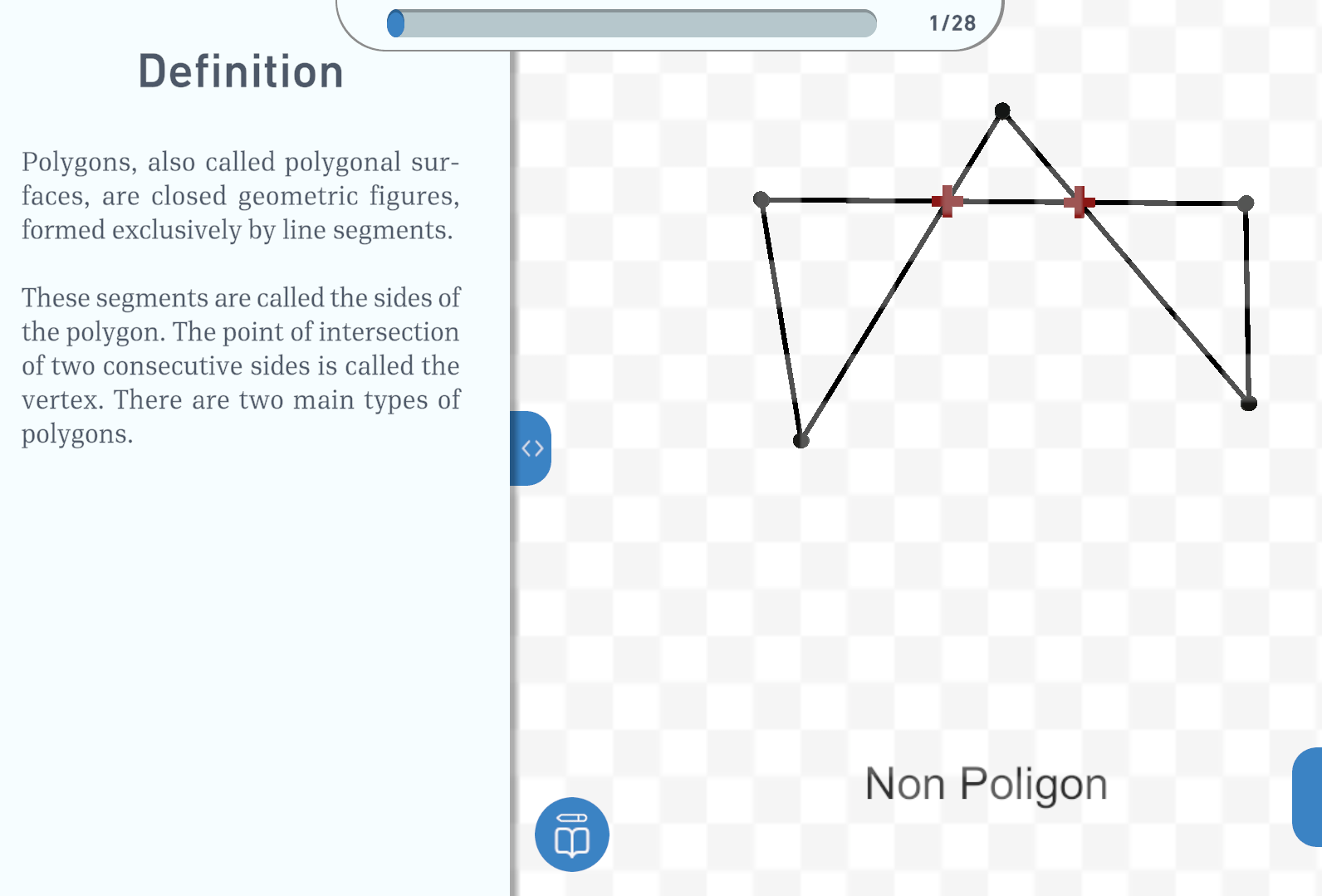
Think about it:
- Are all of these figures geometric shapes?
- Which ones seem different from the others?
- What do you notice about the outline of these figures?
💡 Teacher's tip:
Draw out students' prior knowledge by noting their hypotheses on the board, without confirming any answers at this stage.
Step 2 — Investigating
What Is a Polygon?
Now, look at the figures in the app again and reflect:
- Is the figure closed?
- Is the outline made up only of straight lines?
- Do the segments meet only at their endpoints?
📌 Guided conclusion:
A geometric figure is considered a polygon when:
- It is closed.
- It is made up only of line segments.
Line segments are called sides, and the point where two sides meet is called a vertex.
Step 3 — Counting and Comparing
Sides and Vertices of Polygons
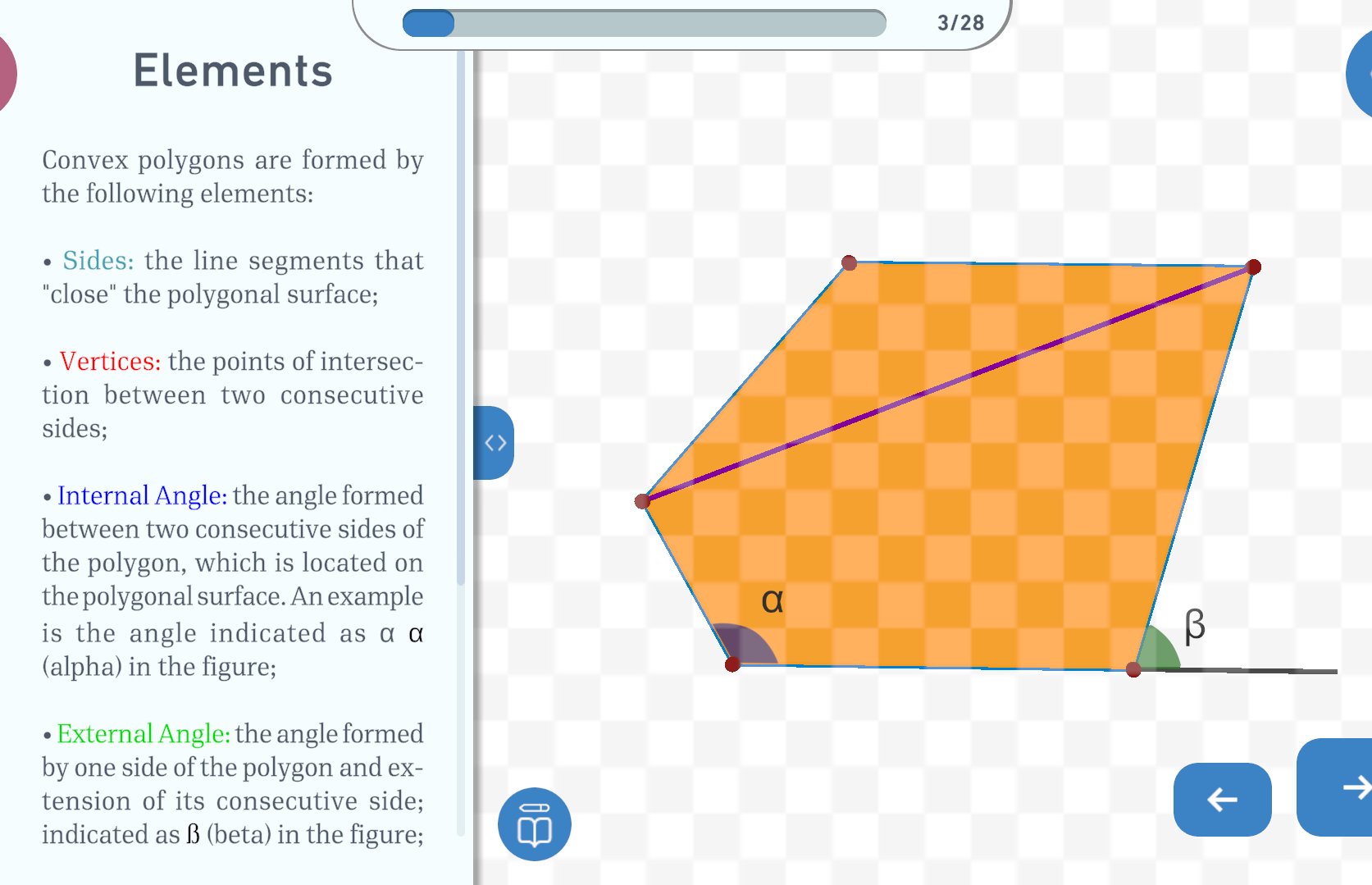
Observe the different polygons presented.
Answer:
- How many sides does each figure have?
- How many vertices does each figure have?
- Is the number of sides equal to the number of vertices?
Key finding: Every polygon has the same number of sides and vertices.
💡 Teacher's tip:
Ask students to draw a polygon and identify its sides and vertices.
Step 4 — Classifying
Convex and Non-Convex Polygons
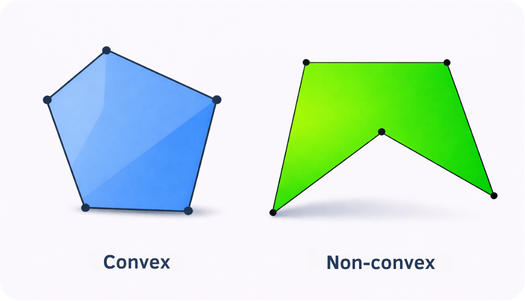
Now that you know what a polygon is, look at the figures again.
Think about it:
- Does the figure have any indentations or recesses?
- Do all the angles point outward?
Classification:
- Convex polygon: has no indentations; all interior angles point inward.
- Non-convex polygon: has at least one indentation.
Step 5 — Taking on a Challenge
Identifying and Naming Polygons
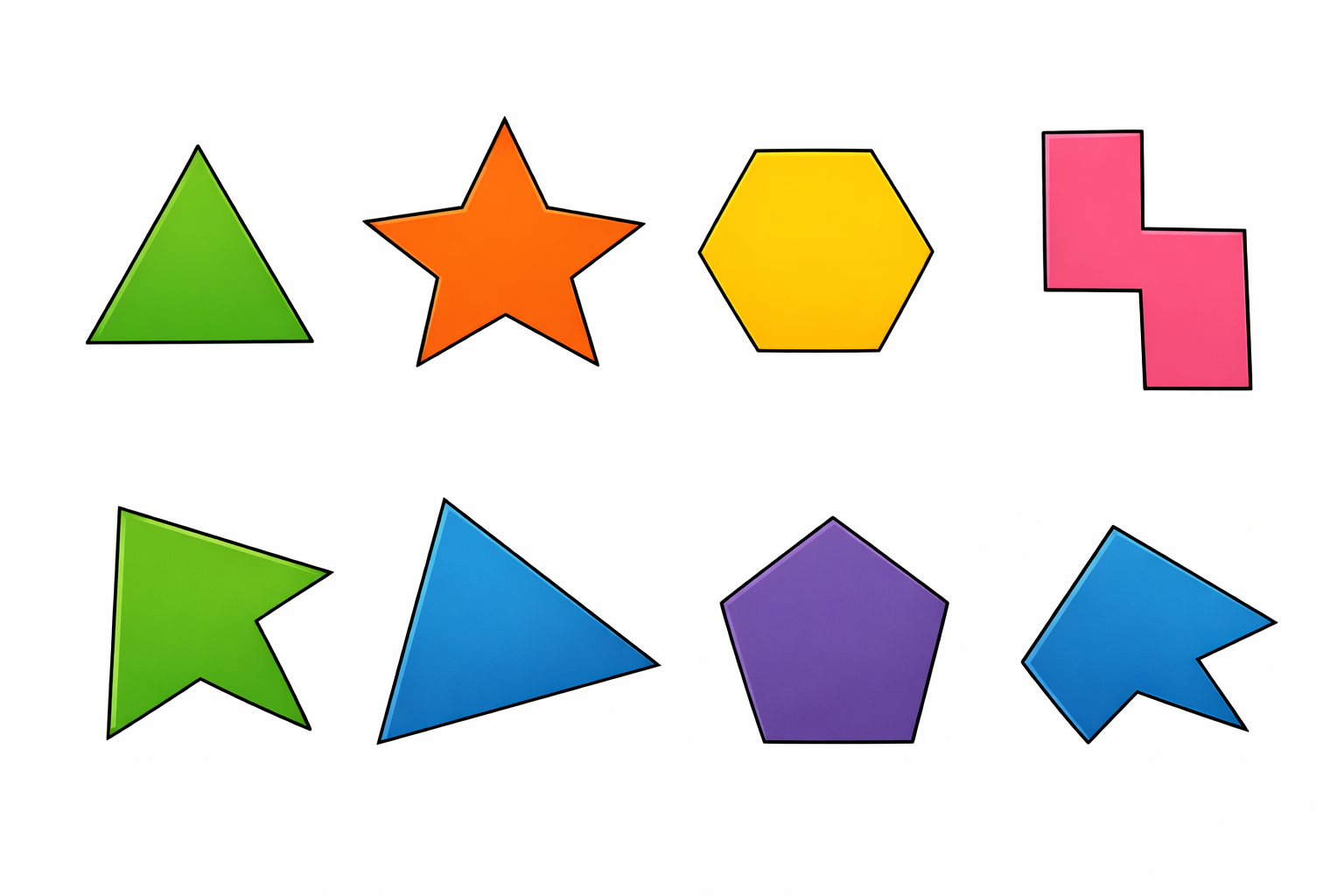
Activity
- Mark which figures are convex or non-convex;
- Record the number of sides and vertices;
- Try to identify the name of each polygon (triangle, quadrilateral, pentagon…).
💡 Teacher's tip:
Help students count and name the polygons.
Step 6 — Leveling Up
Creating With Polygons
Final Challenge
Create a drawing using only polygons. It can be an animal, a landscape, an object, or a character.
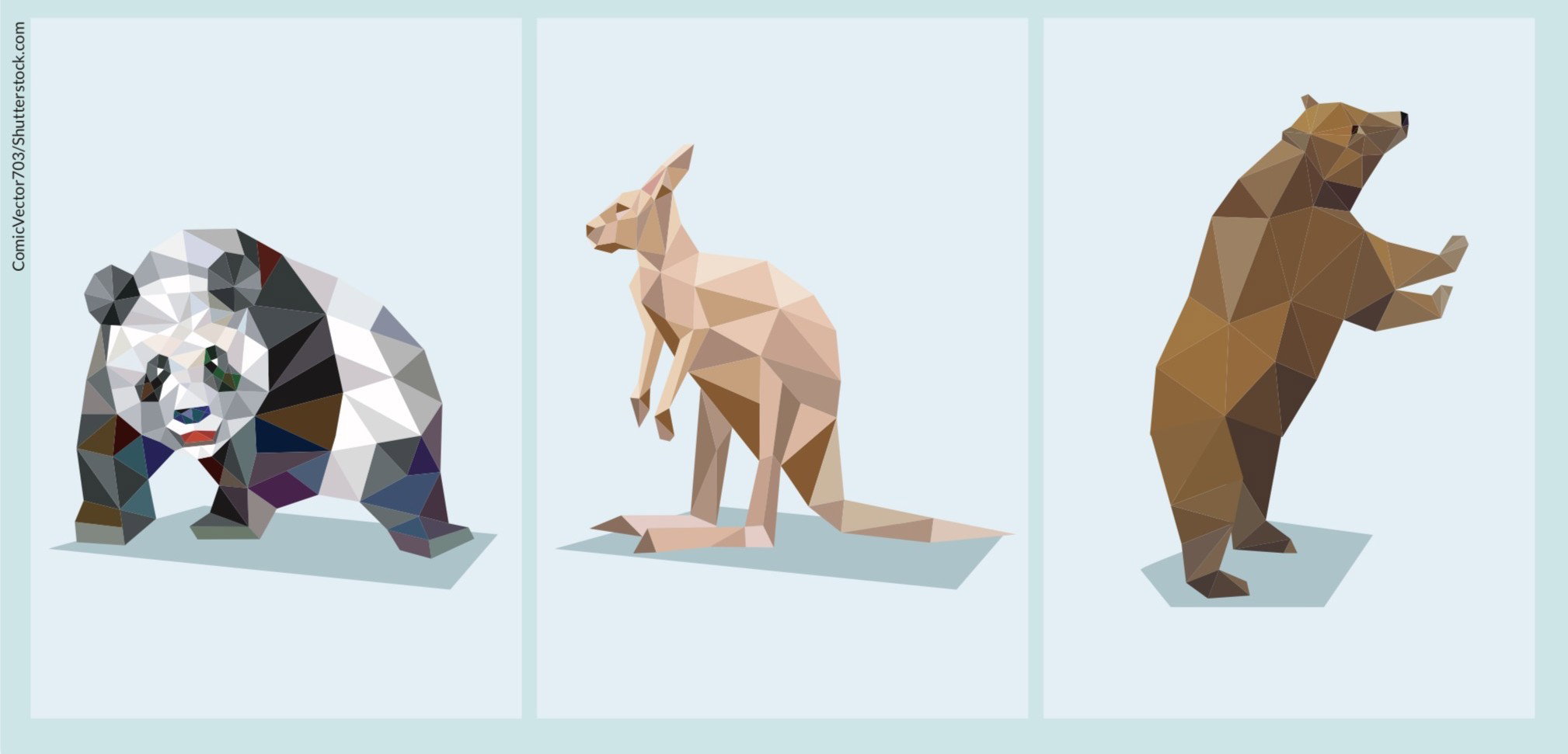
Then, identify:
- Which polygons in your drawing are convex.
- Whether any non-convex polygons appear.
Throughout this Guided Learning experience, you:
- Learned what a polygon is.
- Identified sides and vertices.
- Distinguished convex from non-convex polygons.
- Applied these concepts creatively.
Now, look around you: how many polygons can you find?
👉 Want to keep learning?
Explore Inspire Universe's quizzes to enhance your understanding of mathematics.
This material is protected by copyright. Reproduction, distribution, or sharing, in whole or in part, without authorization from Inspire Universe, is prohibited under Brazilian Copyright Law (Law No. 9,610/1998).

Copyright © 2025 | Universo Inspira