
What Changes With the New National Education System?
12 January 2026
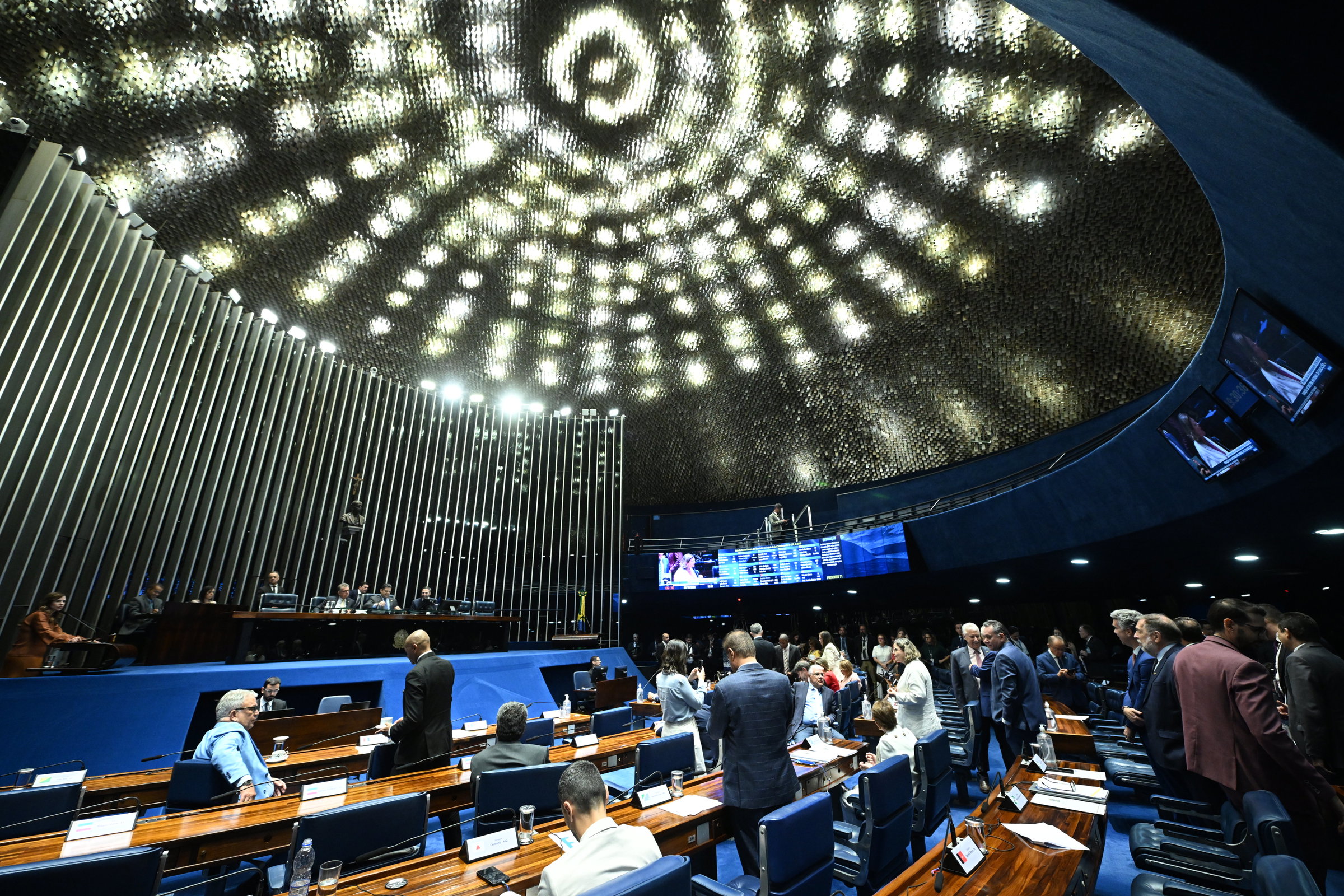
Federal Senate plenary chamber during a regular deliberative session. Order of the day. Photo: Carlos Moura/Agência Senado. Source: Agência Senado
Understand what changes with the creation of the National Education System, enacted in December 2025, and how the new law seeks to reduce inequalities and integrate educational policies in Brazil.
In December 2025, Brazilian education underwent a major structural change with the enactment of Complementary Law No. 220/2025, which establishes the National Education System (SNE). The new legislation, signed by President Luiz Inácio Lula da Silva, concludes years of debate in Congress and establishes clear guidelines for organizing educational policies across the territory.
But in practice, what does this law change? And why is it considered a milestone for Brazilian education? Below, we explain the main points.
What is the National Education System (SNE)?
The National Education System is a legal structure that integrates and organizes educational policies throughout the country. Before the law, the federal government, states, and municipalities often acted in a disjointed manner, resulting in overlapping actions, service gaps, and inequalities between school systems.
With the SNE, education now follows common guidelines, with defined responsibilities and permanent mechanisms for cooperation between federal entities. The idea is to have a coordination axis that makes public education policies more coherent and continuous.
Why Was the SNE Created Now?
The system addresses a persistent problem: significant educational inequalities across regions, schools, and social groups. While some education systems have solid infrastructure and stronger teacher support and recognition, others still face basic shortages.
The SNE is meant to move education closer to a true state policy—planned for the long term and less vulnerable to abrupt shifts from one administration to the next. In other words, it tries to reduce reliance on stop-and-start initiatives that change with the political cycle.
How Does the Shared Governance Model Work?
One of the law’s central pillars is shared, collaborative governance. Under Complementary Law* No. 220/2025, the federal government, states, the Federal District, and municipalities are expected to make decisions collaboratively through permanent negotiation bodies—namely, two- and three-level intergovernmental commissions.
In practice, this means:
-
Education policies are discussed jointly.
-
Goals and guidelines are negotiated among levels of government, rather than imposed unilaterally.
-
There is a more structured dialogue to reconcile national priorities with local realities.
The model is designed to reduce conflict, avoid duplicated efforts, and make public spending more effective.
What Changes in Assessments and Quality Standards?
The new law also strengthens the coordination of educational assessments at the national level. Existing systems, such as Saeb (a large-scale assessment for basic education) and Enade (a national exam for higher education), are now officially part of the SNE and serve as tools for monitoring the quality of education in the country. These assessments evaluate student performance, examining factors such as school infrastructure, teacher training and recognition, as well as the organization and functioning of education networks.
The data produced inform goals, supporting policies and investments, including those based on the Quality Student Cost (Custo-Aluno Qualidade – CAQ), which defines the minimum amount necessary per student to ensure an adequate standard of education.
How Does the SNE Address Educational Inequality?
According to lawmakers and experts heard by the Federal Senate, the SNE has the potential to address historical inequalities by improving the coordination of financial resources, supporting networks with greater difficulties, and establishing national quality standards.
The law also provides for specific attention to indigenous and quilombola populations, respecting cultural, territorial, and social contexts. This recognition, now more explicit, seeks to give greater consistency to policies that previously appeared fragmented.
Why Does This Matter for the Public?
Although the National Education System seems like a technical issue, its effects can be seen in everyday school life. A more integrated education policy tends to minimize improvisation, increase transparency regarding investments, and upgrade teaching conditions over time.
In short, the SNE aims to lessen inequalities between regions and networks, promoting greater equity in access to quality education; it is about building bridges where isolated actions previously predominated.
—
*In Brazil, a “complementary law” is a type of statute defined by the Constitution, used to regulate topics that require more detailed rules than an ordinary law.
—
To make sense of all the details, official statements, and the full context of the law's enactment, check out the original report published in December 2025 by Agência Senado.
See Also

Copyright © 2025 | Universo Inspira